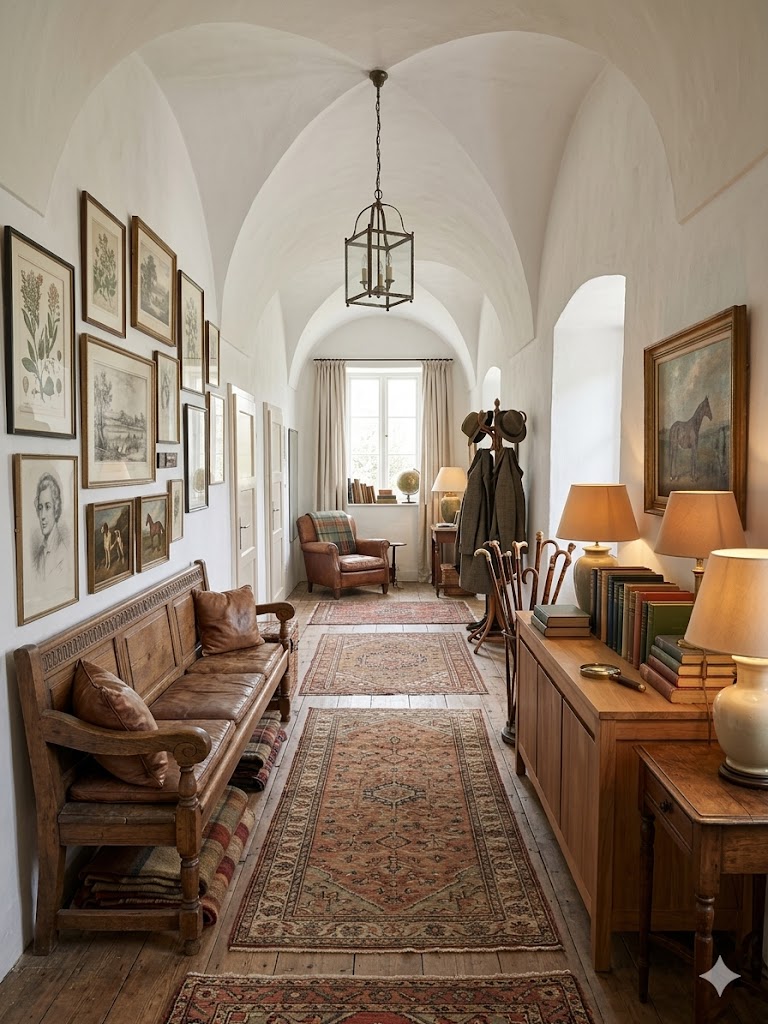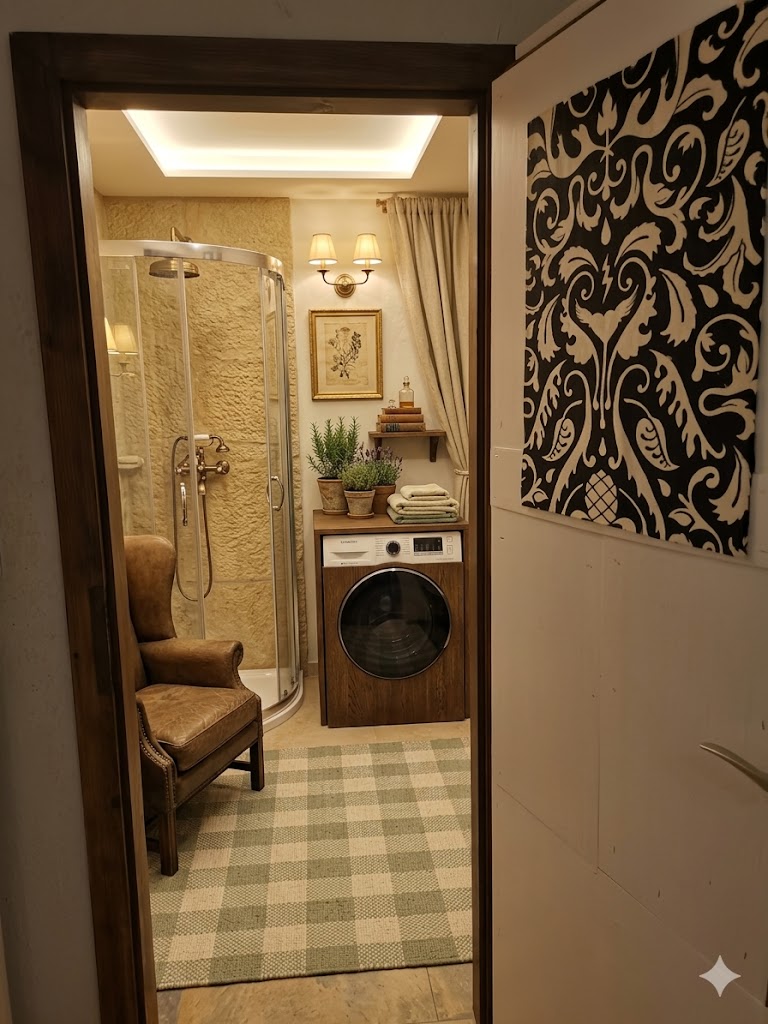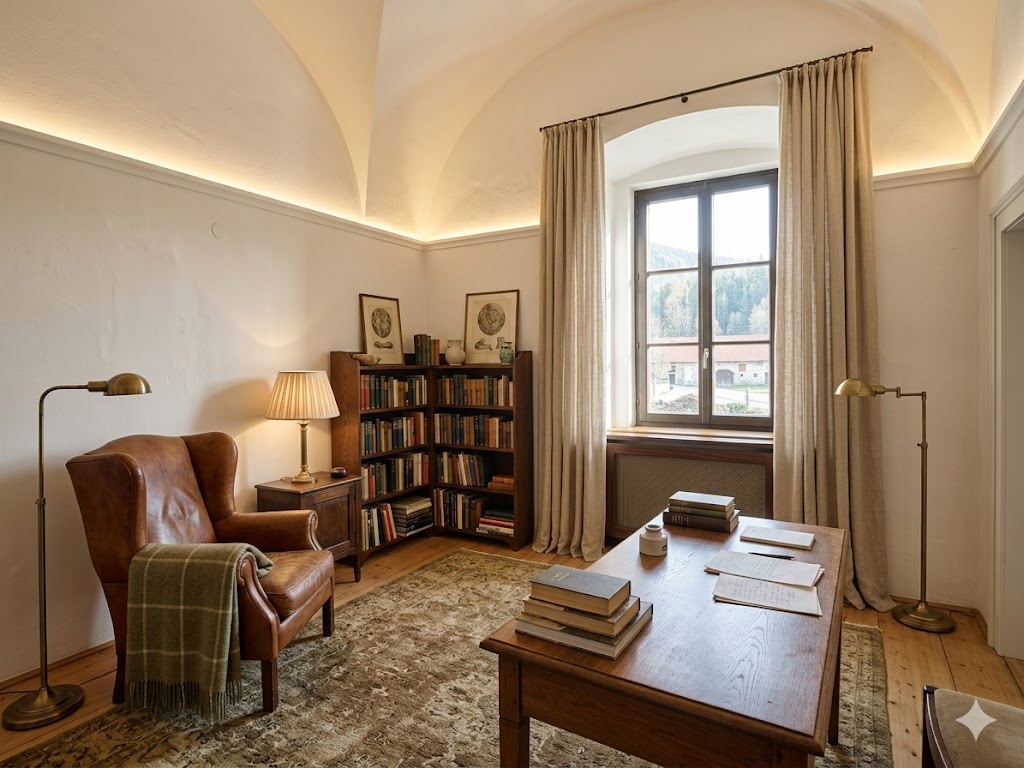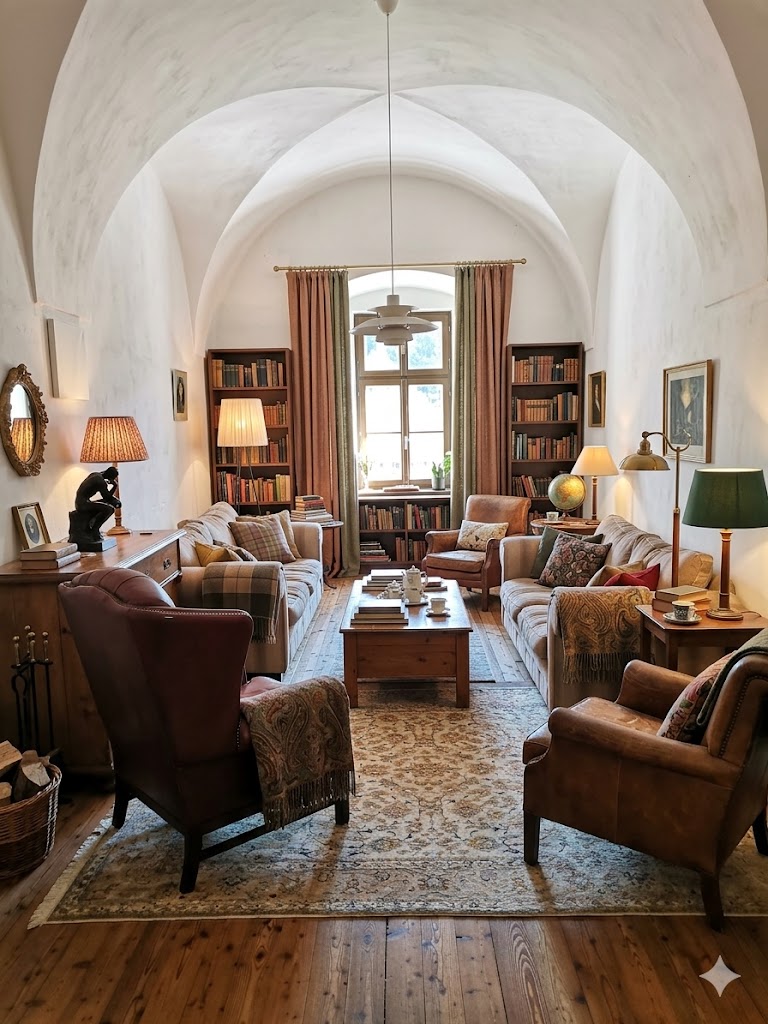
Hidden inside the former Cistercian abbey of Neuberg an der Mürz, this vaulted apartment occupies what researchers believe may once have formed part of the monastery’s medieval infirmary — a place where architecture, silence and care were deeply intertwined. Rather than pursuing restoration in the conventional sense, the apartment embraces a gentler philosophy: preserving the layered calm of the old structure while allowing everyday domestic life to unfold quietly beneath centuries-old vaults.
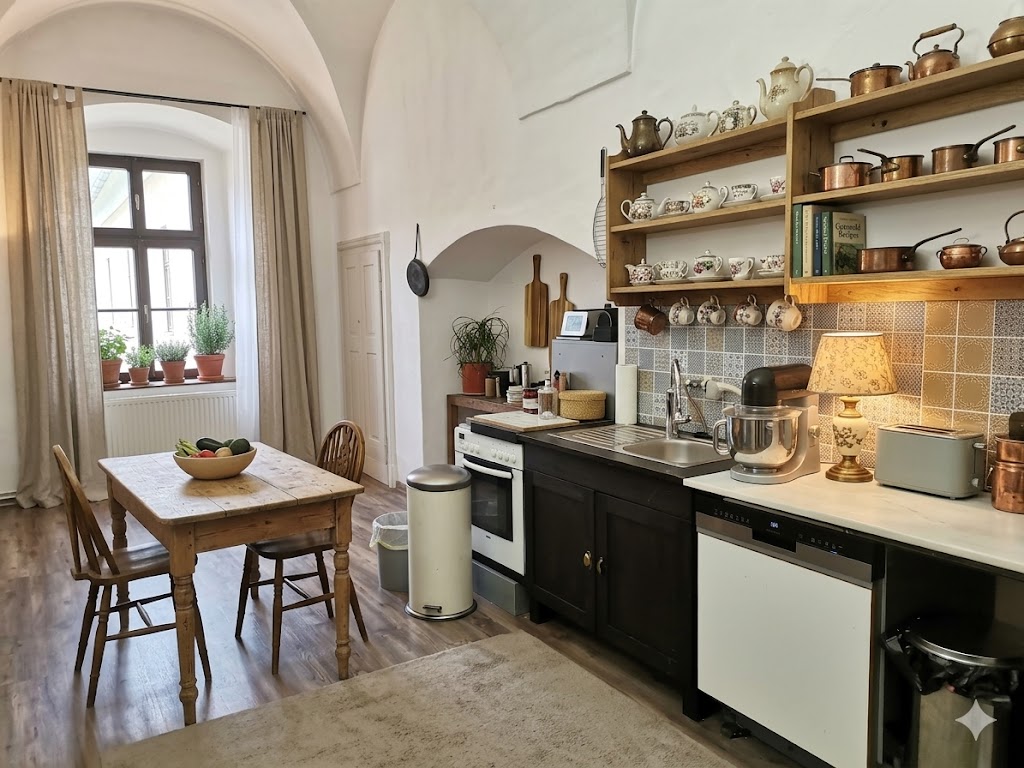
The apartment’s appeal lies not in dramatic interventions, but in restraint. Much of the existing structure has deliberately been left untouched: pale walls continue to reflect natural alpine light, the historic vaults remain visually dominant, and newer additions are kept understated rather than concealed behind expensive reconstruction.
In many ways, the rooms feel less “designed” than slowly accumulated — an atmosphere closer to an English country retreat than a contemporary apartment. Lamps glow softly against thick masonry walls, books gather naturally in corners, and furniture appears collected over decades rather than curated for effect.
The result is emotionally warm without becoming theatrical. There is no attempt to imitate a luxury hotel, nor to recreate a museum version of monastic life. Instead, the apartment feels lived-in, contemplative and deeply protective during long alpine winters.
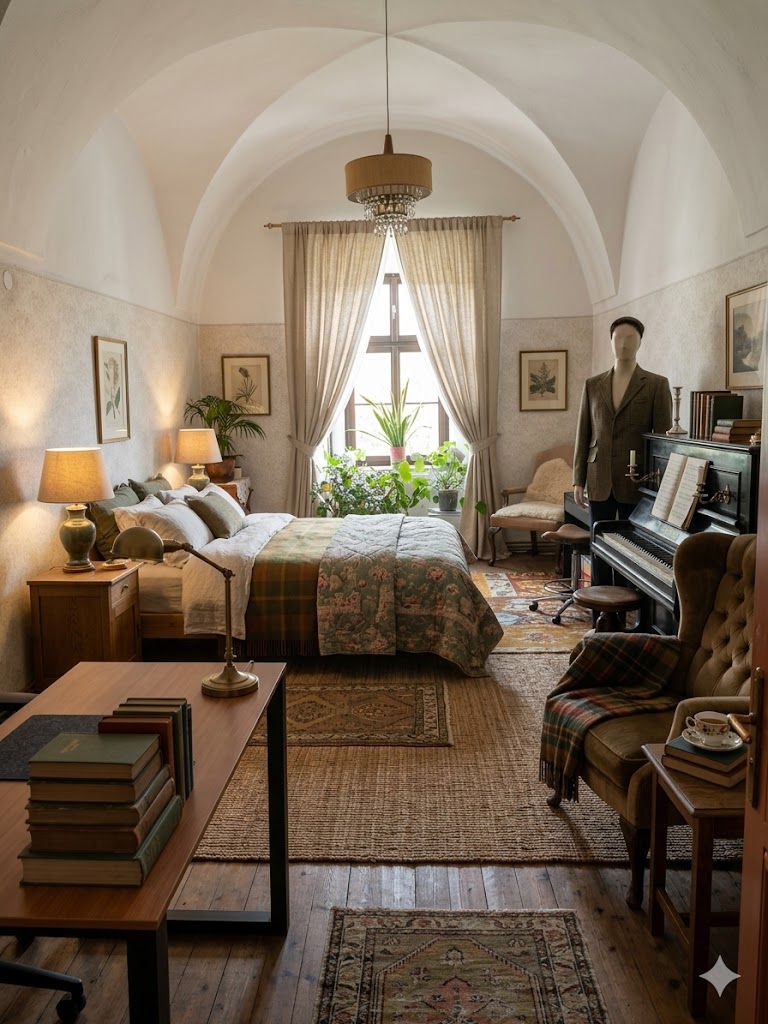
The bedroom demonstrates perhaps the clearest balance between monastic architecture and domestic warmth. Rather than introducing minimalist furniture or highly stylised contemporary pieces, the room leans into layered textiles, warm timber and softly aged surfaces.
Existing white walls were intentionally preserved, helping the vaulted ceiling retain its remarkable sense of height and calm. Daylight moves gently across the curved plaster throughout the day, while traditional lamps create pools of warmth in the evening.
There is also a distinctly English sensibility to the room — not formal country-house grandeur, but the quieter intimacy of inherited interiors shaped gradually over time.